EN 388 cut & impact gloves EN 1492 lifting slings Ice-pack cooling vests
tao@kuangshitrading.com  ·  Replies within 1 business day
KS KUANGSHI SAFETY Industrial Safety Equipment
Home / Gloves / Leather welding sleeves

Leather welding sleeves

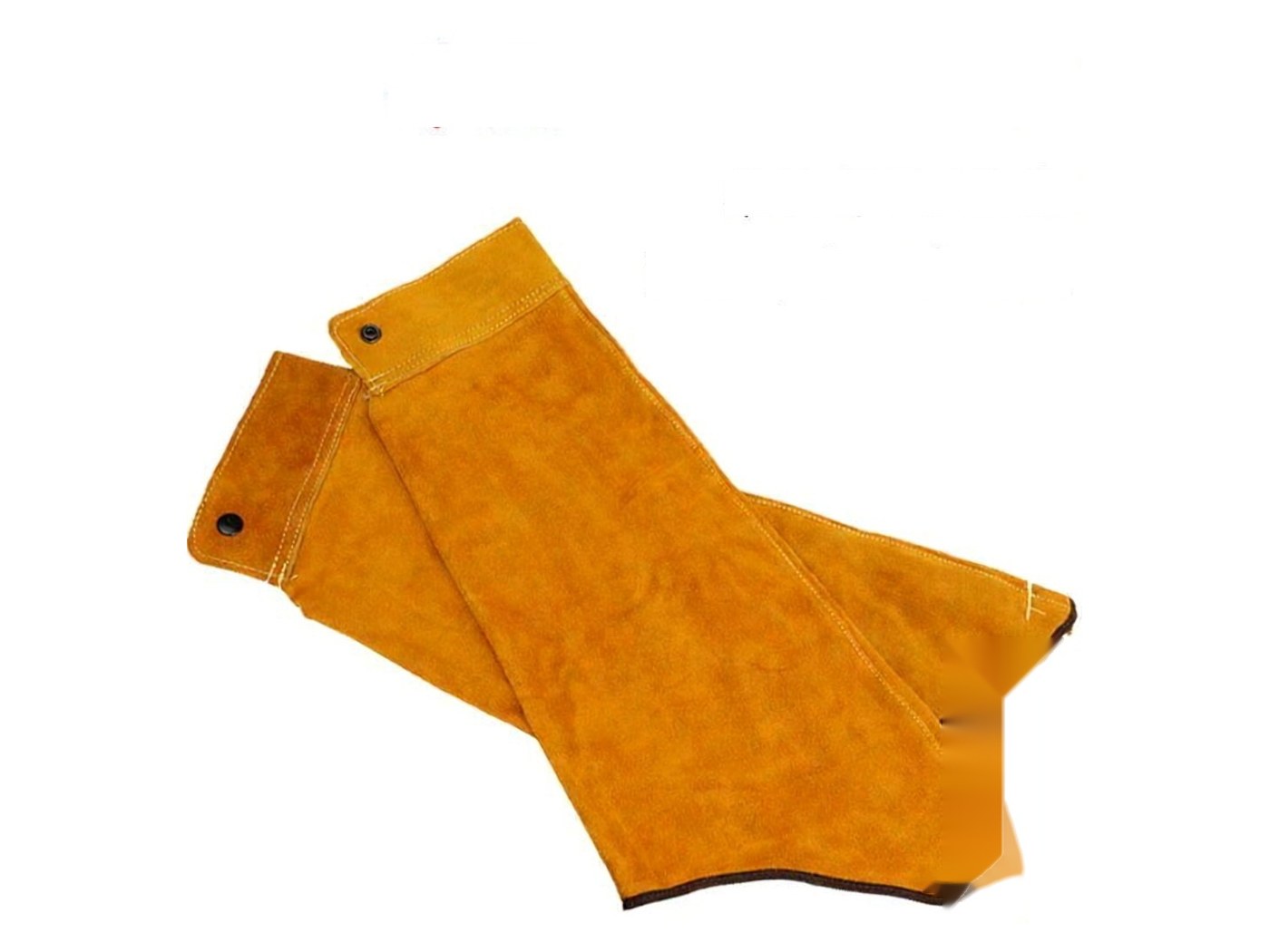
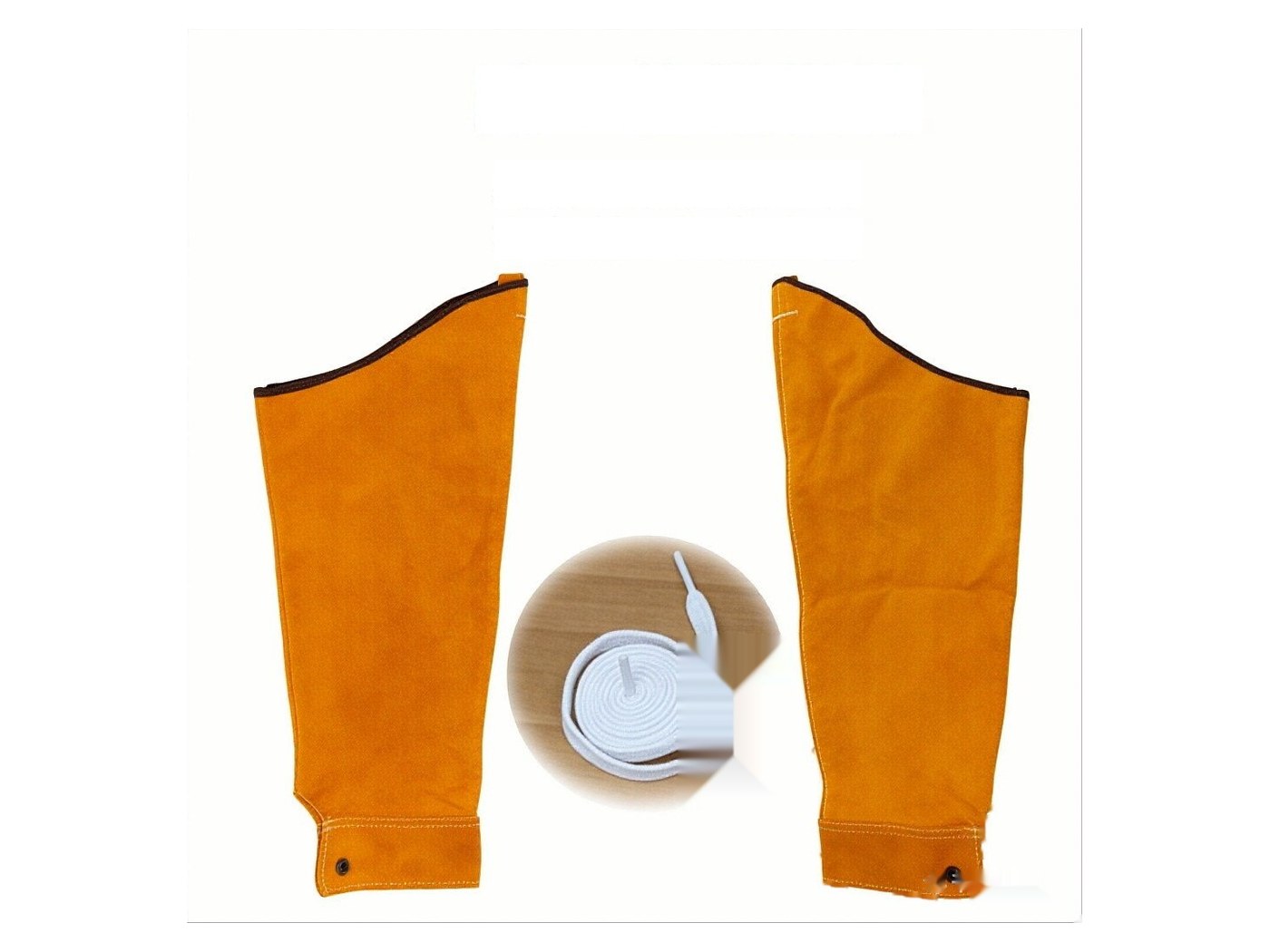
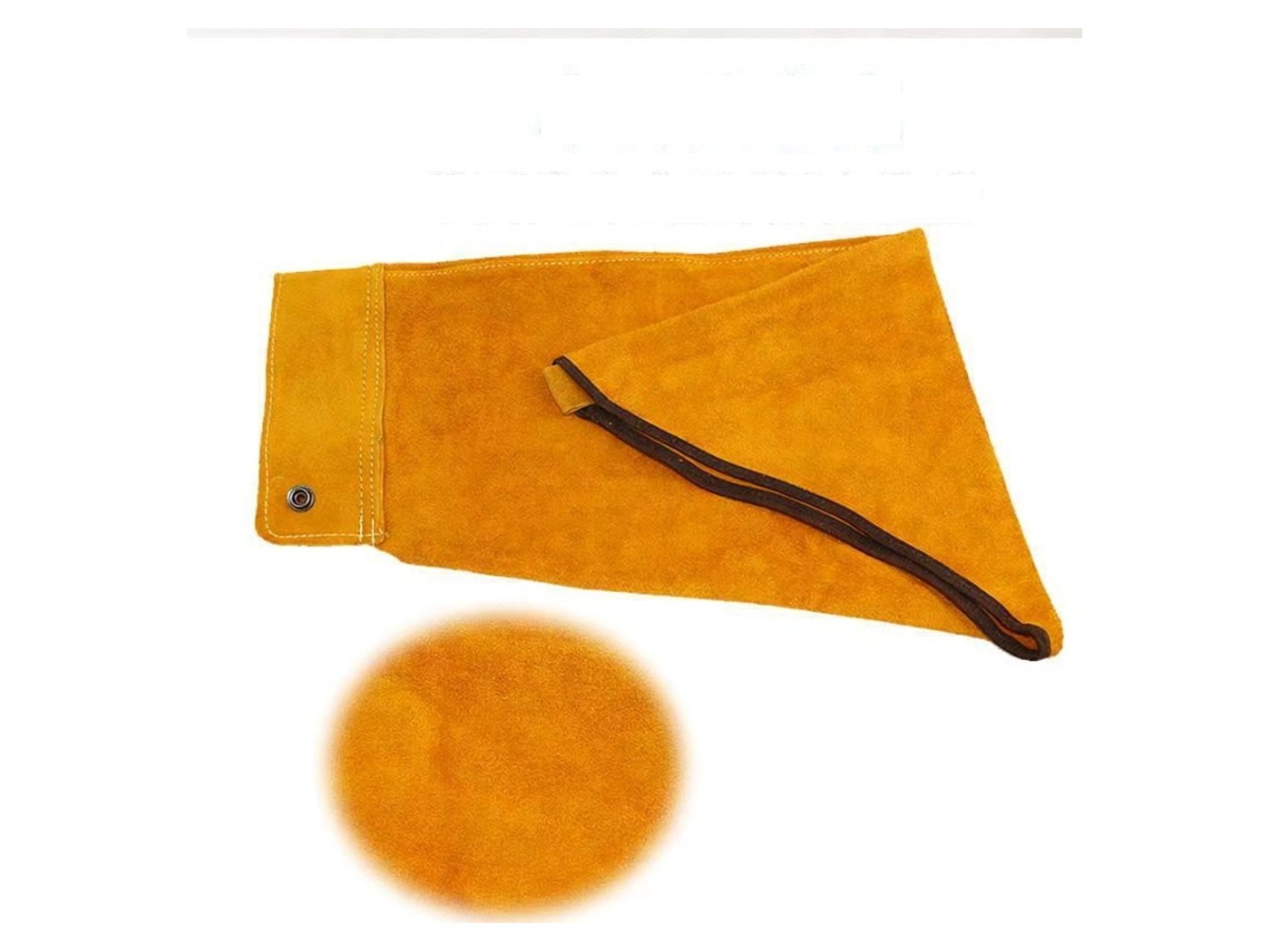
Cowhide sleeves that cover the forearm from wrist to elbow, made for the jobs where the heat and the spatter reach further than a glove cuff ever will. Single-piece hide, sewn with flame-resistant thread, with a cross-shoulder strap and a stud closure so it stays on when the arm is moving. Tested to EN 407 for thermal risk and EN ISO 11611 for welding.

Two tan cowhide welding sleeves overlapped, showing the stud closure at the cuff and the single-piece hide construction A pair of leather welding sleeves standing upright, showing the shoulder strap and the button cuff A single leather welding sleeve laid flat, showing the cross-shoulder strap and the stud closure at the cuff
Why a sleeve and not a glove

The forearm is where the burn happens

A welding glove protects the hand. It does nothing for the forearm, and the forearm is where a dropped slag or a run of sparks travels when the welder is working overhead or the seam is at knee height. A cowhide sleeve extends that protection past the wrist, and the difference between a burn on the hand and a burn on the inner arm is often the difference between a medical record and a week off.

The EN 407 marking, digit by digit Six digits under the flame pictogram
DigitPropertyWhat it means on the label
1Burning behaviourHow the material reacts to flame — whether it ignites, chars or melts.
2Contact heatThe temperature the glove surface can take before the heat reaches the skin, and for how long.
3Convective heatResistance to a hot gas or flame jet. Measured by how long the back of the glove takes to rise 24°C.
4Radiant heatHow much radiant energy the material blocks — the factor that matters beside an arc.
5Small splashes of molten metalWhether small droplets stick to the surface or run off without burning through.
6Large quantities of molten metalThe hardest of the six. Large volumes of molten metal transfer far more energy than a splash.
EN 407 is not EN ISO 11611

EN 407 measures thermal risk in general. EN ISO 11611 is the welding-specific standard and adds what a welding glove actually faces: resistance to molten metal spatter, flame spread behaviour, seam strength, and the electrical resistance against an accidental contact with a live conductor up to 100 V DC. It also splits the requirement into Type A and Type B — Type A for heavy welding and cutting where the mechanical requirements are higher, Type B for lighter work where dexterity matters more. A distributor selling into European workshops should be selling the Type A or Type B designation, not just a temperature rating.

Construction

What you are actually buying

Two leather sleeves and a glove that will not survive a week of welding are a false economy, so it is worth being specific about the hide, the thread and the closure rather than buying on the word "leather".

HIDE

Single-piece cowhide

One piece of hide per sleeve rather than a patchwork of offcuts. The seam count drops, the weak points disappear, and the sleeve keeps its shape through repeated welding cycles instead of curling at the first splash. The underside is what you feel against the skin, and it should be smooth.

THREAD

Flame-resistant stitching

Ordinary thread burns through first and the seam becomes the hole the heat gets through. We use flame-resistant thread and specify the seam strength on the test report, because a sleeve is only as good as its weakest stitch.

FIT

Strap and stud closure

A cross-shoulder strap with a stud or button cuff keeps the sleeve from sliding down the arm when the welder is reaching overhead. The strap length is adjustable, which is what makes one size work across a workshop rather than needing a size run.

Programme options Heat and spatter values are stated per variant on the test report. Confirm the duty cycle at enquiry.
Series Hide Length EN 407 EN ISO 11611 Typical use
KS-W20 Cowhide, split 40 cm Contact heat 1, small splashes 2 Type B Light welding, TIG, fabrication work
KS-W40 Cowhide, split 45 cm Contact heat 2, small splashes 3 Type A General arc welding, workshop use
KS-W60 Cowhide, full grain, thicker 45 cm Contact heat 2, small splashes 3 Type A Heavy welding, cutting, shipyard and repair work
KS-W80 Cowhide, full grain, reinforced 50 cm Contact heat 2, small splashes 3, larger spatter rating Type A Steel erection, foundry and heavy fabrication
Documents

What arrives with the goods

  • EN 407 test report with the six-digit thermal marking, stating the test conditions and the laboratory
  • EN ISO 11611 test report with the Type A or Type B designation, the molten metal spatter result and the seam strength
  • Declaration of Conformity referencing Regulation (EU) 2016/425 with the standard version date stated
  • Material declaration — hide type, thickness, tannage and the fat content figure, which affects both comfort and the EN 11611 innocuousness requirement
  • Batch and carton traceability — every carton marked with a reference that resolves to a specific report
The leather detail nobody asks about

EN ISO 11611 puts a limit on the fat content of the leather — 15% maximum for the material to count as innocuous. Leather that has been properly tanned behaves differently under a flame test than leather that has simply been soaked, and the fat content figure on the report is part of what the standard is checking. It is also why we do not substitute split leather for full grain without saying so on the offer: the two behave differently on the test.

The mistake we see most often

Ordering a welding sleeve on the temperature rating alone. A sleeve rated for contact heat says nothing about how it behaves when molten metal lands on it, and spatter is what actually causes the burn in a welding bay. The EN 407 digits 5 and 6 — small and large quantities of molten metal — are the two that decide whether a worker keeps the sleeve on all shift, and they are the two a buyer almost never asks about.

Matching the sleeve to the glove

These are leather, not knitted, so they do not carry an EN 388 cut marking and they are not a substitute for a cut-resistant glove — they are a layer over it. Ordered together, the sleeve and the glove arrive as one package with one packing list, which is how a welding PPE range should reach the workshop. Tell us at enquiry which glove the sleeve is worn over and we will match the cuff length and closure accordingly.

Send us the welding process and the duty cycle

Tell us the process, the position the work is done in, and how many hours a shift the wearer spends in the arc. We will return a specification with the hide, the length, the EN 407 and EN ISO 11611 ratings, and the documents that ship with the order.

Page V2.0 · site V2.1 · updated 1 November 2026