EN 388 cut & impact gloves EN 1492 lifting slings Ice-pack cooling vests
tao@kuangshitrading.com  ·  Replies within 1 business day
KS KUANGSHI SAFETY Industrial Safety Equipment
Home / Gloves / Anti-static (ESD)

Anti-static and ESD gloves

Gloves for electronics and semiconductor assembly, where a single electrostatic discharge can destroy a component that looks perfectly fine. Supplied to EN 1149-1 and EN 1149-2 for the material properties, with the vertical resistance values stated on the test report rather than left to a vague "anti-static" claim on the hang tag.

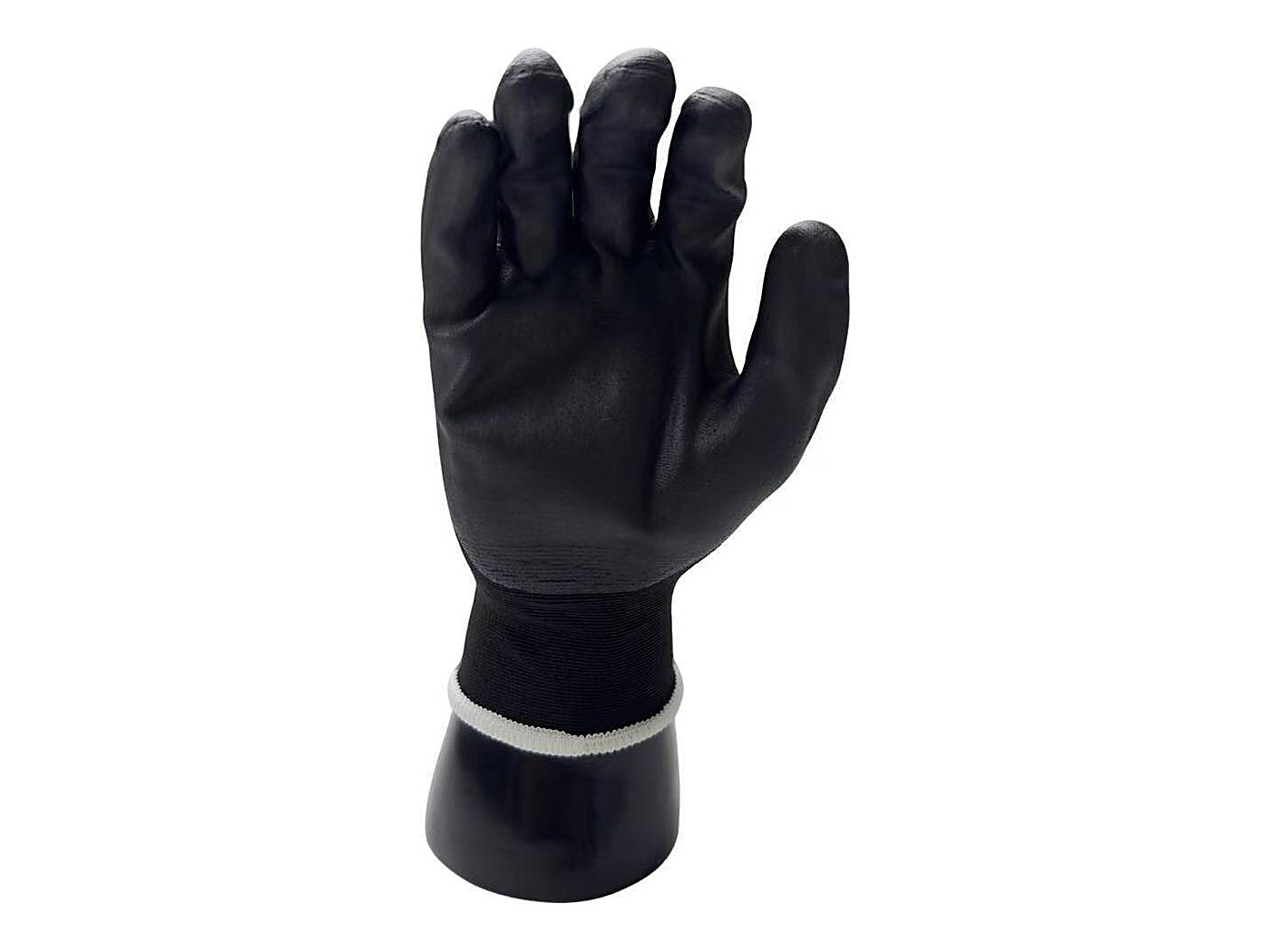
Black anti-static work glove with an extended coated cuff and a ribbed knit wrist band
Read the number, not the label

"Anti-static" is not a specification

Anti-static on a hang tag promises nothing. What matters is the resistance value measured under a defined method, because resistance is a range with three distinct bands and only one of them belongs in an electronics line.

The three resistance bands IEC 61340-5-1
BandSurface resistanceWhere it belongs
Conductive below 1 × 10⁴ Ω Grounding paths and shielding. Generally kept out of direct contact with sensitive devices — too fast a discharge is its own problem.
Dissipative 1 × 10⁴ – 1 × 10¹¹ Ω The target band for anything a person wears or touches inside an ESD protected area. Charge bleeds away at a controlled rate.
Insulative above 1 × 10¹¹ Ω Charge stays where it is. An ordinary nitrile glove sits here — it is not ESD-safe just because it is a glove.
The standards we work to

EN 1149-1 covers surface resistivity, with the material requirement at ≤ 2.5 × 10⁹ Ω. EN 1149-2 covers vertical resistance through the material. EN 16350 is the ATEX route for explosive atmospheres and requires vertical resistance below 1 × 10⁸ Ω. IEC 61340-5-1 and ANSI/ESD S20.20 define the control programme at facility level rather than the glove itself, but most importers specify against them, so we test to the method each one names and report against the standard your customer actually audits.

Construction

How the three families differ

The construction decides how the glove behaves, and it also decides whether the glove can be laundered and reused. A conductive carbon core, a dissipative PU coating and a carbon-loaded knit are three different answers to the same question.

KNIT

Carbon-loaded knit

Conductive carbon fibre blended into the yarn, usually with a PU fingertip or full palm coating on top. The most common construction in general assembly, and it survives repeated washing better than most people expect. Fibre content and gauge are confirmed on the technical sheet.

COAT

Dissipative coated

A dissipative nitrile or polyurethane coating over a liner. Full palm coating gives chemical splash resistance as well, which matters where the line also uses solvents. Finger-tip coating variants are available where full coverage interferes with feel.

CUFF

Extended cuff, coated

The gauntlet-style construction: a long coated cuff that overlaps the sleeve of the ESD smock, so there is no gap where the wrist enters the garment. This is the pattern you see on electronics and battery assembly lines, and it is what our photograph shows.

Programme options Resistance values are stated per variant on the test report; confirm the band your customer's process requires at enquiry.
Series Construction Cuff Typical resistance Washable Typical use
KS-E10 15 gauge nylon knit, PU fingertip Knit wrist Dissipative, 10⁶ – 10⁹ Ω Yes, 40°C Precision assembly, electronics rework, inspection
KS-E20 13 gauge carbon-loaded knit, PU palm Knit wrist Dissipative, 10⁶ – 10⁹ Ω Yes, 40°C General PCB assembly, component handling
KS-E30 Dissipative nitrile coated, seamless liner Knit wrist Dissipative, 10⁶ – 10⁹ Ω Limited Automotive and EV battery assembly, solvent areas
KS-E40 Coated gauntlet, extended cuff Extended coated gauntlet Dissipative; EN 16350 variant to 1 × 10⁸ Ω Limited Semiconductor lines, explosion-risk areas under EN 16350
The point people miss

A glove is one link in the ground path

An ESD glove on an ungrounded person simply makes that person a slightly better conductor. The glove controls the charge at the contact point; the ground path is what actually removes it. That is why IEC 61340-5-1 requires personnel grounding through a wrist strap or through ESD footwear and flooring, and why a glove can never be sold as a substitute for a control programme.

Humidity is the variable buyers forget

Resistance climbs as the air gets drier. A glove that measures inside the band at 50% relative humidity can fall outside it at 15%. That is why every test report states the humidity and temperature at which the measurement was taken, and why we quote against the condition your customer's own audit will be run in. If your end user works in a dry, conditioned cleanroom, say so at the enquiry stage.

Documents for the audit

We supply the EN 1149-1 surface resistivity result and the EN 1149-2 vertical resistance result, measured at 23 ± 1°C and 25 ± 5% relative humidity on finished gloves including the cuff, plus a charge decay figure where the customer specifies one. Every value is traceable to the production batch, and the carton carries the batch reference.

What is not covered

These are static-dissipative gloves. They are not electrical insulating gloves and they do not protect the wearer against electric shock or mains voltage. For live electrical work the correct product class is certified insulating gloves to IEC 60903 or ASTM D120, which is a different specification entirely. We would rather say so than let the two get confused in a tender.

Send us the resistance window and we will match it

Tell us what band your customer's process requires, whether the line is in an ATEX area, and how often the gloves are laundered. We will return a specification with the construction, the resistance values as measured, and the documents that ship with the order.

Page V2.0 · site V2.1 · updated 1 November 2026